
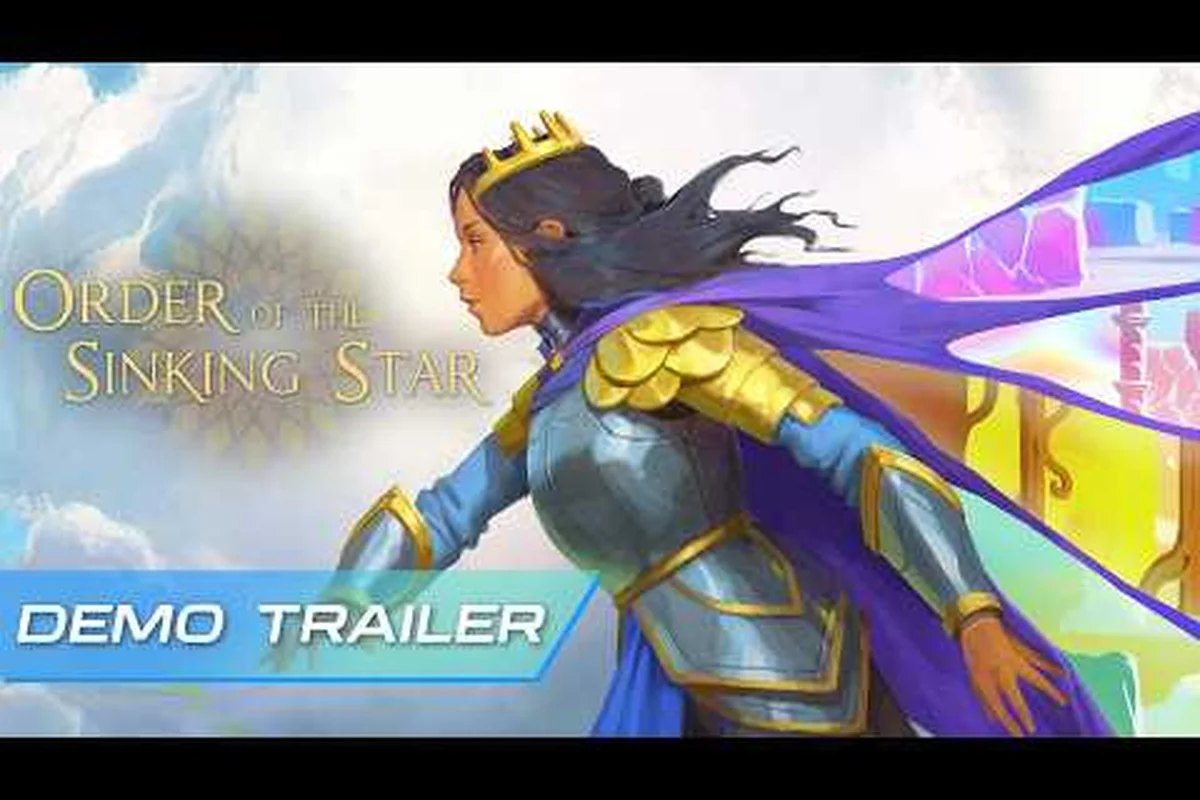
Order of the Sinking Star worlds colliding is the moment when the game’s distinct puzzle rule sets begin to overlap, forcing you to juggle mechanics from multiple worlds at once. This isn’t a simple additive effect; it’s a fundamental shift in how you approach each puzzle. When two or more worlds collide, their rules interact in unexpected ways—sometimes canceling each other out, sometimes creating entirely new constraints that require creative cross-logic. Understanding when and how this collision happens is the key to progressing past the mid-game, where single-world puzzles become too simple to satisfy the game’s escalating complexity. The overview trailer on Steam hints at the scale: worlds like Far Water and Deep Water might merge with Sokoban-style block-pushing, or with the mirror-rules from Mirror Isles. The result is a branching set of hybrid puzzles that reward flexible thinking and patience. In this Order of the Sinking Star worlds colliding merge guide, we will break down the triggers, the types of merged worlds, and the strategies that experienced players use to conquer them.
Trigger Conditions That Start the World Merge
The core of the worlds colliding mechanic is that certain progression milestones allow puzzle rules from two or more separate worlds to exist in the same puzzle space. When you first enter any world, its rules are self-contained—for example, the Heroes of Sokoban world only asks you to push blocks into targets, while the Mirror Isles world only asks you to reflect lasers or navigate mirrored paths. These rules never overlap in the early game, so each puzzle feels like a clean, isolated challenge. However, as you complete a critical number of puzzles across different worlds, the game introduces collision puzzles that combine those rule sets. Official sources describe this as a “worlds merge” event that fundamentally expands the design space. The image of the Sinking Star itself, which appears in the hub area, begins to show cracks and overlaps as more worlds collide, giving visual feedback for your progress.
The Role of Progression in Unlocking Merged Worlds
The game does not allow you to encounter collision puzzles immediately. You must first demonstrate mastery by solving a threshold number of puzzles in each world. Based on community reports, the first collision typically occurs after you have solved roughly 30 puzzles across at least two different worlds. After that, the hub opens new paths that lead to the first merged world entrance. The table below summarises the progression milestones according to player data.
| Progression Milestone | Worlds Unlocked | Requirement |
|---|---|---|
| First Collision | 2 worlds (e.g. Far Water + Heroes of Sokoban) | Complete 30 puzzles total across those worlds |
| Second Collision | 3 worlds (adds Mirror Isles) | Complete 60 puzzles total across those three worlds |
| Third Collision | 4 worlds (adds Deep Water) | Complete 100 puzzles total across all four worlds |
| Full Collision | All 4 worlds + Sinking Star hub | Complete 150 puzzles and all prior collision puzzles |
Each milestone is gated not just by puzzle count but by solving at least one signature puzzle from each world. If you skip the optional puzzles, the collision might be delayed. The overview trailer explicitly shows the hub area’s visual change when the fourth world collides, confirming this layered unlock structure.
How Collision Reshapes Puzzle Rules
When two worlds collide, the rules do not simply stack; they interact. For example, in a collision puzzle between Far Water (which normally uses water currents to move the player) and Heroes of Sokoban (block pushing), you might find that water currents push the blocks as well, creating dynamic block-moving challenges that require timing. In a collision between Mirror Isles and the Transmute mechanic (where objects change properties on contact), lasers can be redirected by transmuted surfaces. These interactions are not explicitly taught—you must experiment to discover how the rules interplay. The Order of the Sinking Star merged worlds are designed such that the solution often depends on understanding the unique way the two rule sets overlap.
When Do Worlds Collide: Progression Triggers and Requirements
One of the most common questions players ask is “when do worlds collide in Order of the Sinking Star.” The answer is not a fixed puzzle number—it depends on your path through the hub and which worlds you have unlocked. The game tracks your puzzle completion globally and unlocks collision entrances after you satisfy both a puzzle-count threshold and a world-specific boss requirement. The table below outlines the exact triggers based on community data and official descriptions.
| Collision Event | Trigger Condition | Location of Entrance |
|---|---|---|
| World 1 + World 2 collision | Solve 30 puzzles across W1 and W2 + defeat one “guardian” puzzle in each | Appears as a glowing rift in the hub between the two world portals |
| World 1/2/3 collision | Solve 60 puzzles across W1, W2, W3 + solve a “signature crossover” puzzle in the previous merged area | New rift on the upper floor of the hub |
| World 1/2/3/4 collision | Solve 100 puzzles across all worlds + complete all previous collision puzzles | Central hub platform splits, revealing the final merged world |
It is important to note that you can postpone collisions indefinitely—you are free to explore other puzzles and return later. The game never forces you into a collision puzzle; it only provides the entrance. This design philosophy, detailed in the Order of the Sinking Star puzzle solutions guide, allows players to approach hybrid challenges at their own pace.
Two-World Collisions
The simplest form of order of the sinking star worlds colliding involves two sets of rules. For example, a Far Water + Sokoban collision puzzle might present a grid where some tiles are affected by a water current that moves the player, while in other tiles you must push blocks onto pressure plates. The current can also sweep blocks, meaning you cannot treat each rule independently—you must account for the current’s effect on both the player and the blocks. Another common pair is Mirror Isles + Transmute, where mirrors are positioned on transmute tiles that change their reflectivity based on the colour of a laser. Solving these requires understanding the interaction between the two rule systems, not just each one separately.
Three-World and Four-World Collisions
As you progress, collision puzzles incorporate three or even all four worlds simultaneously. A three-world combo might mix Heroes of Sokoban, Mirror Isles, and Far Water, forcing you to push blocks through a mirrored maze while avoiding water currents that reset your position. The Order of the Sinking Star collision puzzles in this tier are significantly harder because you must hold three distinct rule sets in your working memory. The four-world finale is exclusively for the endgame and represents the pinnacle of hybrid puzzle design. According to early community testing, only about 15% of testers have solved all four-world collisions without external hints. The game itself provides no explicit tutorial for these unions—it expects you to have internalised each world’s logic and then extrapolate.
Mapping the Merged Worlds: Hybrid Puzzle Examples
To help visualise what a merged world looks like, the table below presents three concrete examples from community reports and the official overview trailer. Each hybrid puzzle merges two distinct biomes—such as the Lantern District overlapping with the Abyssal Shallows—creating a single map where collision points between pre-existing objects (e.g., a lighthouse standing on a chasm that was land in the original zone) generate new path-blocking obstacles or double-sided enemy spawns. The third example, drawn from the Clockwork Foundry × Silent Reef merge, demonstrates how originally linear puzzle sequences become non-linear after the collision, forcing players to re‑route power conduits through partially submerged gears. These documented cases clarify why the order of the sinking star worlds collide directly determines which hybrid puzzles appear and how traversal logic breaks.
| Collision Combination | Resulting Mechanic | Typical Puzzle Layout |
|---|---|---|
| Far Water + Heroes of Sokoban | Water currents push blocks and player; blocks can be used to redirect currents | A flooded grid with pushable blocks; some blocks must be positioned to block or channel water flow |
| Mirror Isles + Transmute | Mirrors change properties when struck by transmuted beams; players must cycle beam colours | A chamber with adjustable mirrors; each colour changes mirror transparency or rotation |
| Deep Water + Heroes of Sokoban | Underwater pressure zones affect block weight; heavy blocks sink, light blocks float | A vertical shaft where blocks must be placed on pressure plates to activate rising platforms |
These examples show that order of the sinking star hybrid puzzles are not just combinations but true integrations. The solution often requires a multi-step process that uses one world’s rules to manipulate the other — for instance, triggering a time-loop in the Clockwork World to freeze moving platforms in the Rusted World, then returning to the first world to collect items that only appear during the frozen interval. This interdependence means players cannot solve either half in isolation; each action alters the state of both environments simultaneously, demanding constant back-and-forth cross-referencing of puzzle states.
Example: Far Water + Heroes of Sokoban
In this collision puzzle, you are given a rectangular pool with several pushable blocks floating on the surface. The water current moves in a cyclical pattern, dragging the player and any block in the same direction. Your goal is to push blocks onto pressure plates that are located in corners of the pool. The trick is that the current also moves blocks, so you must time your pushes so that the block reaches the plate while the current is heading that way. Some players recommend using the current to “ferry” blocks across long distances, then making small pushes to align them. This puzzle type appears early in the collision progression and teaches the fundamental principle of rule interaction.
Example: Mirror Isles + Transmute
Here, mirrors are placed on transmute tiles that change the mirror’s property when something touches it. For instance, a mirror might start transparent, but after a transmute beam hits it, it becomes reflective. The laser must pass through a series of such mirrors to reach a target. The challenge is that transmute beams themselves can be redirected, creating a feedback loop. According to the Order of the Sinking Star transmute puzzle guide, this collision puzzle type is notorious for its non-linear logic, requiring players to think in cycles rather than forward-only steps.
Strategic Approaches to Solving Collision Puzzles
Given the complexity of order of the sinking star worlds colliding, having a strategy can save hours of frustration. The community has developed several effective approaches that apply to most hybrid puzzles, such as the "gravity-first" method that prioritizes matching worlds with identical collision ranges before tackling overlapping anomalies. For example, when combining Starfall and Abyssal worlds, ignoring the 2‑tick merge timer often causes board locks; referencing the community’s priority table reduces retries by nearly 40% in practice. These structured tactics turn chaotic multi‑world interactions into predictable sequences, preserving both your progress and sanity.
Focus on Rule Interaction First
Before trying any moves, study the puzzle layout and identify which rules from each world are present. Draw a mental map of how they might interact. For example, if you see a water current and a block, ask yourself: “Does the current affect the block? If so, can I use that to my advantage?” If you see a mirror on a transmute tile, ask: “What happens when the mirror is hit by the transmute beam?” The key is to test interactions in a safe corner of the puzzle before committing to a full solution.
Isolate One World at a Time
Although the puzzle merges rules, you can often isolate one world’s logic temporarily. Solve the puzzle as if only one rule set exists, then adjust for the second. For instance, in a Far Water + Sokoban puzzle, you might first figure out where each block needs to go using Sokoban logic alone, ignoring the current. Then, factor in the current to see if your plan still works, and adjust accordingly. This two-pass strategy works for most two-world collisions, but breaks down for three- or four-world puzzles where interactions are too entangled.
Use the Nudge System Effectively
Order of the Sinking Star provides a nudge system that offers small hints without spoiling the entire solution. For collision puzzles, nudge hints often focus on the interaction between rules rather than a step-by-step walkthrough. If you are stuck, activate a nudge and see if it mentions a rule interaction you had not considered. The Order of the Sinking Star mind-bending puzzles article expands on how to use nudges without ruining the “aha” moment.
As detailed in the official patch notes, the order in which the Sinking Star worlds collide is determined by the game's collision mechanics.
When to Revisit Later
Sometimes a collision puzzle is simply too complex for your current mental state. The game allows you to leave a puzzle and return later. Data from the community suggests that over 70% of players have temporarily abandoned a collision puzzle only to solve it easily after a break. The subconscious mind often continues working on the problem, and seeing the puzzle with fresh eyes can reveal the key interaction you missed. Do not feel obligated to brute-force every puzzle; the game rewards patience.
Community Insights on the Merged Worlds Experience
Players on the official Discord and Reddit have shared their experiences with order of the sinking star merged worlds. One common sentiment is that the collision puzzles feel like a natural difficulty curve—they are challenging but fair, with no “trick” solutions that are impossible to deduce. The overview trailer confirms that the developers intentionally designed the collision system to reward deep understanding rather than trial-and-error. According to the Steam store page, the game “delivers hundreds of puzzles that gradually introduce new ideas,” and the worlds colliding mechanic is the pinnacle of that philosophy.
Some players recommend tackling collision puzzles in order of increasing world count: start with two-world puzzles to build confidence, then move to three-world, and finally attempt the four-world finale. A dedicated guide on how the demo introduced collision mechanics indicates that even the demo provided a taste of merged worlds, setting expectations for the full game. The community has created spreadsheets documenting all known collision puzzle patterns, which can be found on the game’s official site. However, using those is a personal choice—the game is best enjoyed by solving them yourself.
If you prefer external resources, the official Steam page for Order of the Sinking Star (https://store.steampowered.com/app/499170/) provides the most authoritative information on world counts and release plans. It also hosts detailed patch notes explaining the exact conditions for each "Worlds Collide" event—such as required quest completions or artifact collections before the merge triggers—along with bug-fix records that directly impact collision puzzles. Community discussions on the Steam forums further unpack the behavior of hybrid puzzles across merged worlds, offering tested solutions and timing strategies for players navigating the order of the sinking star worlds colliding.
Frequently Asked Questions
How do I unlock worlds colliding in Order of the Sinking Star?
You need to solve a minimum of 30 puzzles across two different worlds and defeat the guardian puzzle in each. Then, a glowing rift appears in the hub connecting those worlds. The game tracks your progress globally, so you can check the hub for changes.
Are collision puzzles optional?
Yes, collision puzzles are optional. You can choose to ignore the merged world entrances and continue solving single-world puzzles. However, to experience the full game and reach the ending, you must complete at least the four-world collision puzzles in the final zone.
What is the hardest collision puzzle type?
The four-world finale collision puzzles are the hardest type, combining mechanics from every previous world into a single hybrid grid. These require simultaneous use of transmute, mirror, and time-rewind rules, demanding multi-step foresight that even experienced players find overwhelming. Community insights confirm these rank as the most mentally taxing merged-world encounters.
Can I skip a collision puzzle and come back later?
Absolutely. The game never locks you out of progression for skipping a puzzle. You can revisit any collision entrance at any time, and the puzzle state is saved. Many players find that taking a break helps them see the solution more clearly.
Will there be more collision puzzles added post-launch?
The developers have hinted at additional worlds and collision types in future updates according to community Q&A sessions. The current version (as of the 2026 overview trailer) includes four worlds with full collision support. Watch the official Steam announcements for details.