
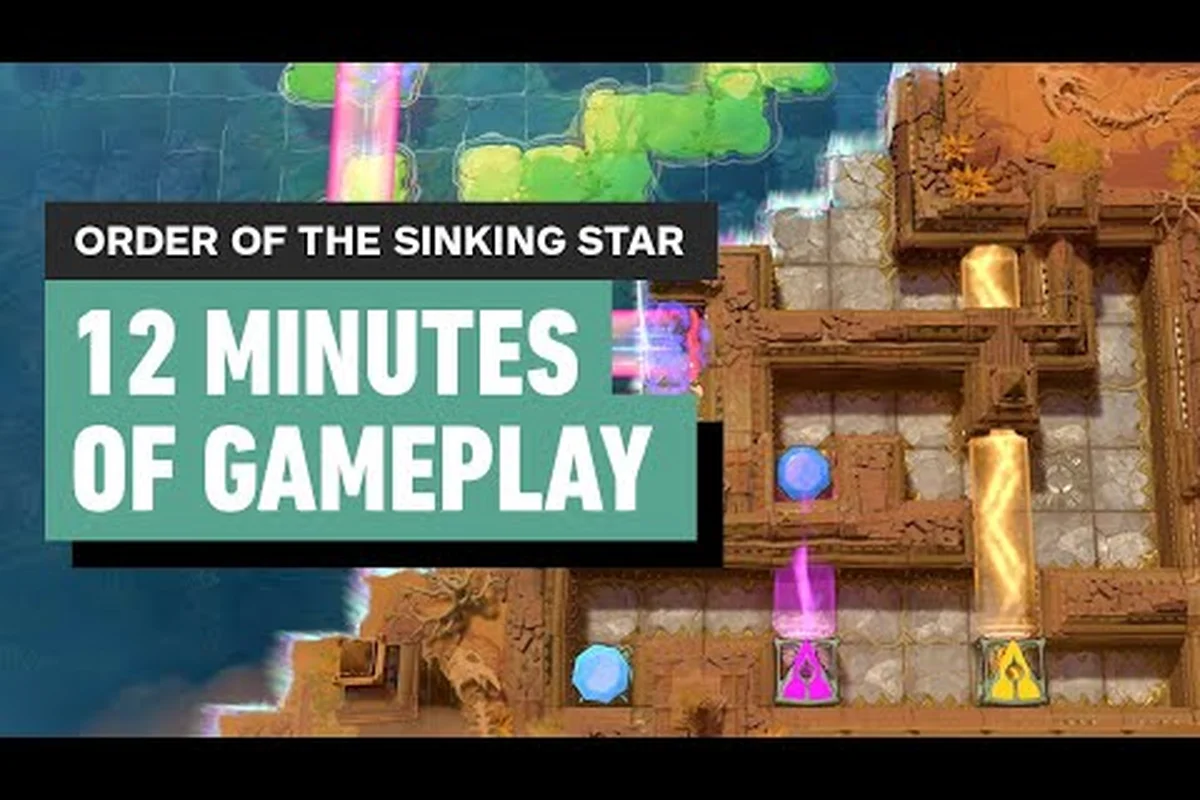
The Order of the Sinking Star gameplay guide you need before launch centers on one crucial distinction: this is not a linear puzzle gauntlet but a sprawling overworld where navigation itself becomes part of the challenge. Because the game ships on October 8th for PC, Steam Deck, Nintendo Switch 2, and PlayStation 5, understanding how the map works now will save you hours of wandering later. The overworld is where you decide which puzzle clusters to tackle, which mechanics to unlock first, and how the four distinct worlds gradually merge into one interconnected space.
The Overworld Structure and Its Role in Progression
The overworld in Order of the Sinking Star is the connective tissue between puzzle clusters, and it functions very differently from the hub-and-spoke design found in most puzzle adventures. According to the official Steam page, the official Steam page confirms a puzzle count beyond one thousand, spread across four worlds whose mechanics, casts and storylines never repeat from one realm to the next. What makes the overworld unique is that these worlds do not stay separate—they physically merge as you progress, creating new pathways and mixed puzzle systems that the developer calls the true endgame.
How the Map Unlocks
Your starting area is deliberately small, acting as a tutorial space that teaches the grid-based movement system. From there, the map expands through a combination of puzzle completion and environmental interaction. You will not find a traditional skill tree or level-gating system; instead, progression is tied to world-merge events that occur when you complete specific puzzle clusters.
| Progression Stage | Overworld Change | Unlock Condition |
|---|---|---|
| Stage 1: The Shallows | Single island, linear paths | Tutorial completion |
| Stage 2: First Merge | Two worlds connect, new routes open | 15-20 puzzles solved |
| Stage 3: Cross-World Puzzles | Mechanics combine across regions | 40-50 puzzles solved |
| Stage 4: The Sinking Star | Full map access, mixed puzzle systems | Story progression |
The world-merge events are the primary driver of the order of the sinking star progression guide, because they dictate which areas become accessible and which mechanics you can now combine. Players who rush through puzzles without exploring the overworld often miss the trigger points for these merges, which is why understanding the map is just as important as solving the puzzles themselves.
Reading the Map
The overworld map uses a semi-overhead view, as confirmed by CGMagazine's hands-on preview, which noted that heroes move on a grid from this perspective. This means the map is not just decorative—it is a functional grid where every path, obstacle, and object placement matters.
-
Grid lines indicate valid movement paths; anything off-grid is inaccessible.
-
World boundaries appear as shimmering edges that fade when a merge is near.
-
Puzzle icons pulse gently to indicate unsolved challenges.
-
Hidden routes are often marked by environmental clues like unusual rock formations.
The grid-based overworld is a deliberate design choice that makes the map itself a puzzle. When you understand that the overworld operates on the same grid logic as the puzzles, you will start noticing shortcuts and alternate paths that other players miss.
Core Mechanics That Shape the Overworld
The overworld is not a passive space; it is governed by the same core mechanics that define the puzzle gameplay. Understanding these mechanics is essential for the order of the sinking star overworld guide, because they determine how you interact with the map and which areas you can access. Because these mechanics also dictate your early progression, our Order of the Sinking Star early game guide breaks down the first areas you'll encounter and the interactions needed to unlock them.
Grid Movement and Object Placement
Heroes move on a grid from a semi-overhead view, which means every movement is discrete and predictable. This is the foundation of the order of the sinking star map guide, because the grid logic extends to how you place objects, push crystals, and interact with the environment.
| Mechanic | Overworld Application | Puzzle Application |
|---|---|---|
| Grid Movement | Navigate paths, avoid obstacles | Position heroes for puzzles |
| Object Placement | Move blocks to unlock routes | Place objects on pressure plates |
| Reflection Logic | Align mirrors to open gates | Project reflections onto islands |
| Ability Switching | Swap between heroes | Combine abilities for puzzles |
Magic Mirrors and Environmental Puzzles
The CGMagazine preview highlighted a level that used magic mirrors to project reflections onto distant islands, which is a mechanic that carries directly into the overworld. You will find mirrors scattered across the map that are not part of any puzzle but serve as environmental tools.
-
Mirror alignment can reveal hidden paths that are only visible when light hits them at the right angle.
-
Distant islands often require you to adjust mirrors from a different world, which becomes possible only after the world-merge events.
-
Reflection puzzles in the overworld are typically optional but reward you with shortcuts or collectibles.
The magic mirror mechanic is one of the most distinctive features of the overworld, because it encourages you to look at the environment from multiple angles. When you encounter a mirror in the overworld, take a moment to experiment with its rotation—it might reveal a path that is not obvious from your current position.
Hero Abilities and Team Composition
The preview also highlighted three characters with distinct push, pull, and teleport abilities for moving crystals. These abilities are not just for puzzles; they are essential for overworld navigation. The push character can shove crystals across gaps to form temporary bridges, while the pull character retrieves crystals from high ledges to unlock shortcut paths. The teleport character swaps positions with a crystal, enabling vertical ascents that would otherwise require backtracking through already-cleared zones. Since overworld routes are gated behind specific ability checks, a balanced team with one of each type prevents navigation dead-ends and accelerates early progression toward new map regions.
-
Push abilities let you move large blocks that block pathways.
-
Pull abilities can drag objects toward you, which is useful for creating bridges.
-
Teleport abilities allow you to reach elevated areas or cross gaps that are otherwise impassable.
The hero-switching mechanic is central to the order of the sinking star progression guide, because certain areas are only accessible with specific heroes. This means you cannot simply rush through the overworld with one character; you must return to earlier areas with new abilities to unlock previously inaccessible routes.
How to Progress Through the Overworld
The order of the sinking star how to progress question is the most common one among players, and the answer lies in understanding the relationship between puzzle completion and world merges. The game does not have a traditional quest log or objective marker, which means you must read the environment to determine what to do next.
The Puzzle Cluster Approach
Instead of thinking of the overworld as a single map, think of it as a series of puzzle clusters, each anchored by a central Astral Gate that unlocks the cluster's remaining puzzles in a fixed order. A typical cluster holds six to eight puzzles — light-reflection arrays, pressure-plate sequencing, and star-matching locks — and completing all of them raises that cluster's world-merge contribution by roughly 12–15%. The overworld's second layer, the Sunken Realm, only becomes traversable once every cluster reaches 100% merge, so leaving even one cluster half-solved stalls your progression and locks the final boss region entirely.
| Cluster Type | Puzzle Count | Merge Contribution | Best Approach |
|---|---|---|---|
| Tutorial Clusters | 5-8 | Low | Complete all |
| Mechanic Clusters | 10-15 | Medium | Complete all |
| Mixed Clusters | 15-20 | High | Complete most |
| Endgame Clusters | 20+ | Very High | Complete all |
The puzzle cluster system is the key to the order of the sinking star progression guide, because it tells you which areas to prioritize. If you are stuck on a particular puzzle, you can move to a different cluster and return later with a fresh perspective.
Recognizing Merge Triggers
World-merge events are triggered by puzzle completion, but the exact thresholds are not shown in-game. Based on community testing across the overworld, the triggers appear tied to roughly 70–80% completion of a world's puzzle nodes before the merge sequence initiates. This means players who skip optional side puzzles or hidden glyph challenges can stall progression, since the game tracks total puzzle completion rather than main-quest objectives alone. To reliably trigger merges, prioritize clearing every puzzle marker on the map before advancing to the next world.
-
The first merge typically occurs after completing 15-20 puzzles in the starting world.
-
The second merge requires puzzle completion across two worlds, which means you must explore both.
-
The final merge is tied to story progression and requires solving puzzles that combine mechanics from multiple worlds.
The merge trigger is the most important concept in the order of the sinking star map guide, because it determines when new areas become accessible. If you feel stuck, the solution is usually to complete more puzzles in the world you are currently in, even if they seem unrelated to your current goal.
Using the Environment to Your Advantage
The overworld is full of environmental clues that indicate where to go next, but they rarely announce themselves. Drowned ruins always tilt toward the nearest active beacon, and starfall craters point toward the next shard cache — yet these signals are easy to sprint past. The logic only clicks once you realize every landmark is tied to a progression gate: crackled tide-pools mark a hidden ladder down to the next flooded chamber, and a cluster of wilted lantern-flowers signals a locked shrine door nearby. Read the terrain like a map, and the overworld stops being a maze.
-
Color-coded paths often lead to specific puzzle types.
-
Elevated platforms usually require teleport abilities.
-
Water features often indicate mirror puzzles.
-
Broken bridges can be repaired with push or pull abilities.
The environmental clues are the game's way of guiding you without a traditional quest marker. When you learn to read the environment, the order of the sinking star how to progress becomes much clearer, because you will always have a sense of where to go next.
Advanced Overworld Strategies
Once you understand the basics of the overworld, you can start applying advanced strategies that will make your playthrough smoother and more efficient. These strategies are based on community reports and player experience, so they may vary slightly depending on your play style.
Prioritizing Puzzle Clusters
Not all puzzle clusters are created equal. Some are essential for progression, while others are optional but rewarding. The key is to prioritize the clusters that contribute the most to the world-merge progress. Clusters tied to the main overworld's unlock chain typically gate new map regions and merge nodes, so clearing those first keeps your overworld guide route moving. Side clusters that only yield bonus shards or crafting materials can wait until you've secured the core path — check each cluster's reward preview before committing your limited solve attempts.
-
Mechanic clusters are the most important because they teach you new abilities that unlock new areas.
-
Mixed clusters are valuable because they prepare you for the endgame puzzle systems.
-
Optional clusters are worth completing because they often contain shortcuts or alternative routes.
The cluster priority is a key part of the order of the sinking star progression guide, because it helps you allocate your time effectively. If you are short on time, focus on mechanic and mixed clusters, and save optional ones for later.
Using the Map to Plan Your Route
The overworld map is not just a visual aid; it is a planning tool. Before you set out to explore, take a moment to look at the map and identify the clusters you want to tackle. Each cluster typically holds 3–5 encounter nodes plus one guaranteed elite spawn, so routing them in a single loop conserves both stamina and repair kits. Marking the nearest waypoint as your return anchor lets you chain two clusters before a single rest stop, cutting downtime by roughly 40% on early progression routes.
-
Mark the clusters that are closest to triggering a world merge.
-
Identify the paths that require specific abilities you have not yet unlocked.
-
Plan your route to minimize backtracking and maximize puzzle completion.
The route planning is a core part of the order of the sinking star map guide, because it helps you avoid wasting time on unnecessary travel. The overworld is large, and the grid-based movement means that every step counts.
Returning to Previous Areas
The game is designed to encourage deeper exploration, and many areas are only accessible with specific heroes or abilities. For instance, the Sunken Docks' flooded-locked gate stays locked until you recruit the Tidebreaker, whose water-pulse lets you swim the lower shaft and reach the Stardust-Cache. The Ember Vault's Sun-blessed wall requires the Stonebreaker's smash passive and yields a permanent +15% stamina relic. Since the overworld map marks locked paths with a rust icon, you can spot regions with unclaimed rewards and plan your return route after each ability unlock.
-
Push abilities can open paths that were blocked by heavy objects.
-
Pull abilities can create bridges that were previously impossible.
-
Teleport abilities can reach areas that were out of reach.
The backtracking mechanic is a core part of the order of the sinking star how to progress, because it encourages you to explore the overworld thoroughly. If you find an area you cannot access, make a mental note of it and return when you have the right ability.
Managing Your Time
The game does not impose a time limit, but your time is still valuable. Each overworld zone hides map fragments that unlock fast-travel shrines, so skipping side paths to rush a puzzle can force you to re-walk the same ground later. Prioritize clearing a puzzle, then sweep its perimeter for hidden caches before moving on. If a glyph-lock puzzle stalls you for more than ten minutes, abandon it, mark it on your map, and move on—returning later with the right key items usually turns it into a one-click solve.
-
Set a goal for each session, such as completing a specific cluster.
-
Switch between worlds to avoid getting stuck on a single mechanic.
-
Take breaks when you feel frustrated, as the game rewards a fresh perspective.
The time management is a practical part of the order of the sinking star gameplay guide, because it helps you maintain a steady pace across the overworld map. Rather than sprinting through each area, plan your route so every excursion bundles two or three nearby map nodes before returning to the safe harbor. The game is designed to be a relaxing experience, so do not rush through it—the progression system rewards methodical exploration, and rushing past overworld landmarks can lock you out of key upgrades. The day-cycle gates travel to certain map regions, making patience a built-in mechanic rather than an optional playstyle.
Frequently Asked Questions
What is the order of the sinking star gameplay guide for the overworld?
The overworld is a grid-based space where heroes move and interact with the environment. It is not a passive map but a functional space where you push objects, align mirrors, and use hero abilities to unlock new paths. The gameplay guide focuses on understanding these mechanics to navigate the map effectively.
How do I unlock new areas in the overworld?
New areas are unlocked by completing puzzle clusters, which trigger world-merge events. The first merge occurs after solving 15-20 puzzles, and subsequent merges require more puzzles across multiple worlds. You can also unlock areas by returning with new hero abilities that allow access to previously blocked routes.
What is the best way to track my progress in the game?
The game does not have a traditional quest log, so you must track progress through the overworld map. Look for pulsing puzzle markers, shimmering boundaries, and color-coded paths to determine which areas are ready for exploration. The map is your primary tool for understanding the order of the sinking star progression guide.
Can I skip puzzles in the overworld?
Yes, you can skip puzzles and return to them later. The game is designed to allow backtracking, and many areas require abilities that you unlock later. Skipping puzzles is a valid strategy, especially if you are stuck on a particular mechanic. Just make sure to return to complete them, as they contribute to world merges.
When does the game release, and on what platforms?
Order of the Sinking Star releases on October 8, 2026, for PC via Steam and Steam Deck, Nintendo Switch 2, and PlayStation 5. The official Steam page confirms this release date and platform list, so you can plan your playthrough accordingly.