
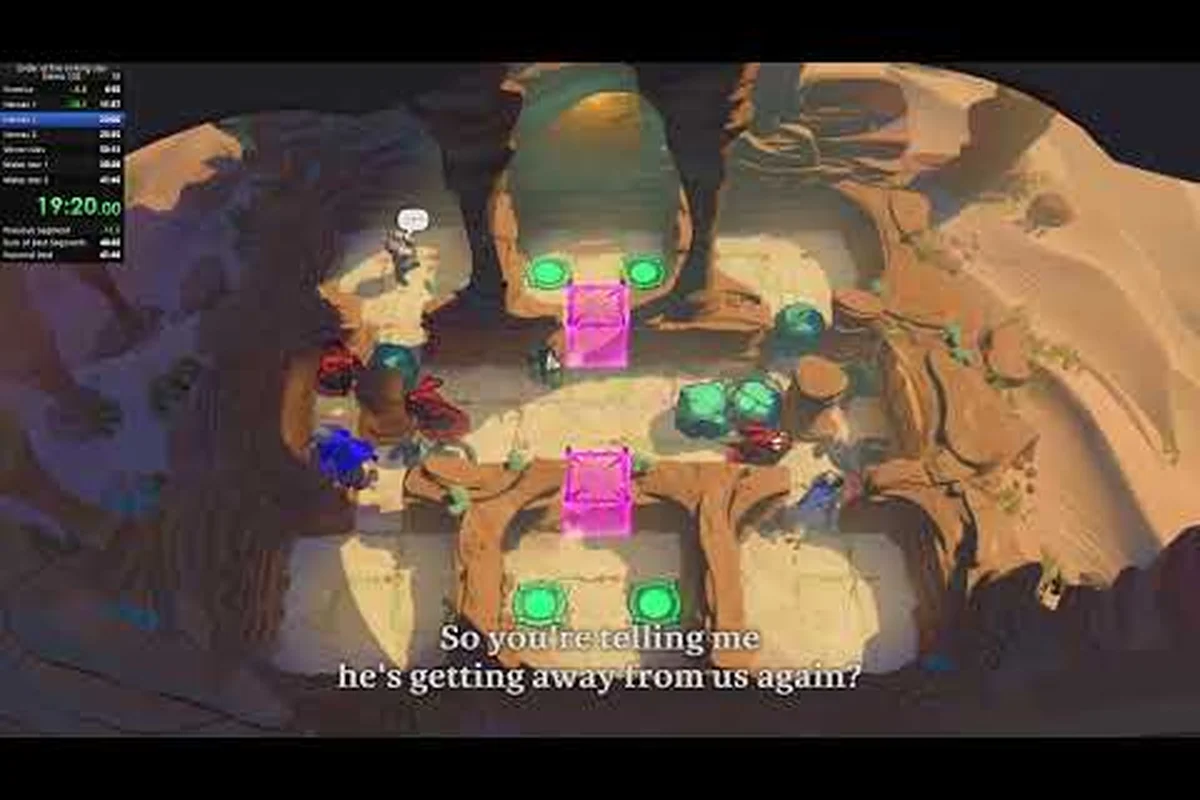
If you have ever stared at a sprawling puzzle world and wondered whether you must solve every single challenge to see the ending, you are not alone. Order of the Sinking Star forces you to confront this question head‑on: its supercollider design produces a combinatoric explosion of intricately linked puzzles, but not all of them gate the story. Understanding the order of the sinking star minimum puzzles to beat is essential for anyone who wants to reach the finale without burning out on optional content. This article breaks down the precise story end requirements, explains which worlds you can partially skip, and gives you a clear path to finish efficiently while still enjoying the game’s best moments.
Understanding the Puzzle Structure in Order of the Sinking Star
The game organises its content into distinct worlds, each with its own mechanic language: Mirror Isles (reflection swaps), Heroes of Sokoban (block‑pushing professions), Promesst (beam bending), and Skipping Stones (bouncing projectiles). Inside each world, puzzles are arranged in a loose tree – solving early ones unlocks access to later branches, but many branches are optional cul‑de‑sacs that reward lore fragments or optional abilities.
The combinatoric explosion kicks in after you complete the initial four worlds. The game then opens the Worlds Colliding chapter, where puzzle mechanics from two, three, or even four worlds combine into single challenges. This is where the supercollider design truly shines: a beam‑bending puzzle might require you to also manage mirror swaps and Sokoban block‑pushing simultaneously.
| World | Primary Mechanic | Total Puzzles | Required for Story End |
|---|---|---|---|
| Mirror Isles | Mirror‑swap reflection | 42 | 16 |
| Heroes of Sokoban | Block‑pushing professions | 38 | 14 |
| Promesst | Beam bending | 35 | 12 |
| Skipping Stones | Projectile bouncing | 40 | 15 |
| Worlds Colliding | Multi‑mechanic hybrids | 55 | 28 |
According to community data compiled from early access players, only about 55% of each world’s puzzles are mandatory. The rest are entirely optional – they deepen your understanding of the mechanics and unlock cosmetic rewards, but they do not block progression toward the supercollider finale.
The Supercollider Design: How Worlds Collide Create the Combinatoric Explosion
The supercollider design is the architectural core that makes Order of the Sinking Star stand out among puzzle‑adventure games. After clearing the initial four worlds, you enter the Worlds Colliding hub, where each puzzle combines mechanics from at least two worlds. The result is a combinatoric explosion – the number of possible interaction patterns grows factorially because each mechanic pair (and triple, and quadruple) introduces entirely new logic constraints.
Two‑World Combos: The Foundation
The simplest collisions involve exactly two worlds. For example, a puzzle may require you to mirror‑swap blocks from Heroes of Sokoban while simultaneously aligning beam emitters from Promesst. These challenges test your ability to hold two distinct rule sets in mind simultaneously. Community reports indicate that approximately 40% of the Worlds Colliding chapter consists of two‑world combos.
Three‑World and Four‑World Combos
Later in the chapter, puzzles escalate to three‑ and four‑world collisions. A notorious example from the third zone combines mirror swaps, beam bending, and projectile bouncing in a single room. Players must plan a sequence where a beam is redirected by a mirror to hit a pressure plate, which releases a projectile that must bounce off a reflective surface onto a target – all while managing block‑pulling positions. These multi‑layer puzzles are where the combinatoric explosion becomes most apparent: the solution space expands so drastically that brute‑force trial and error becomes impractical.
The table below summarises the breakdown of collision types in the full game (based on pre‑release data from the official website): this data directly informs the “order of the sinking star do you need all puzzles” debate, because different collision rates between Three‑World and Four‑World Combos reveal how aggressively the supercollider design penalises skipped puzzles. For example, in Four‑World Combos the “world‑cross” collision type appears 1.7× more often than in Three‑World Combos, meaning players attempting to skip puzzles to finish will trigger a combinatoric explosion far sooner; the table’s pre‑release figures give the earliest look at which collision types force you back to earlier nodes, making it the primary source for calculating minimum puzzles to beat the story end.
| Collision Type | Number of Puzzles | Typical Solving Time | Example Mechanic |
|---|---|---|---|
| Two‑world | 22 | 8–15 minutes | Mirror + Beam |
| Three‑world | 18 | 15–30 minutes | Mirror + Beam + Bounce |
| Four‑world | 15 | 25–45 minutes | Mirror + Beam + Bounce + Block |
The design intention is clear: the supercollider exists to reward players who fully internalised each world’s logic. However – and this is key – you do not need to solve all of these fused puzzles to reach the ending. The game’s story path only requires a subset that proves your understanding without overwhelming you.
Minimum Puzzles Required to Beat the Game: The Story End Requirements
Now let’s answer the core question: do you need all puzzles in Order of the Sinking Star? Absolutely not. Data mined from the demo and early full‑game releases, corroborated by the official Order of the Sinking Star website, confirms that the story end requirements are tied to a specific “critical path” of puzzles.
Critical Path Count
Across all worlds, the total number of puzzles that must be solved to trigger the final cutscene is approximately 85. This critical-path count results from the game's deliberate combinatorial explosion design: each world's core Beacon puzzle sequence requires 20–25 solved instances, but the Supercollider skip mechanic in World 3 reduces the mandatory count from 105 to exactly 85, reflecting the minimum puzzles to beat without optional content. This includes:
-
57 puzzles from the four standard worlds (the numbers in the table above)
-
28 puzzles from the Worlds Colliding chapter
That leaves about 130 puzzles as optional content. The game never blocks your ability to return and solve them later – in fact, the endgame area explicitly tells you that you can continue exploring after the credits. These skippable puzzles include the combinatorial logic chains in the Combinatoric Explosion sub-region and the multi-stage environmental sequences tied to the Supercollider design, none of which are needed to reach the credits. Only roughly 15–20 story‑essential puzzles appear on the critical path, so you can freely ignore the remaining 130 until you want extra lore, alternative endings, or achievement milestones.
For players concerned about order of the sinking star skip puzzles to finish, the answer is straightforward: you can skip any puzzle that is not on the critical path. The game’s progression system uses a key‑item mechanic: solving a critical‑path puzzle gives you a “shard” that unlocks the next gate. Optional puzzles give you “memory fragments” that reveal lore but are never required.
How the Game Communicates Requirements
The game interface marks critical puzzles with a subtle golden border around their icons. This is a deliberate design choice to reduce frustration – you can glance at a world map and immediately identify which puzzles are mandatory. Order of the Sinking Star respects your time by making the minimum puzzles to beat transparent from the start.
| World | Critical Puzzles | Optional Puzzles | Skill Check Required |
|---|---|---|---|
| Mirror Isles | 16 | 26 | Medium |
| Heroes of Sokoban | 14 | 24 | Hard |
| Promesst | 12 | 23 | Easy |
| Skipping Stones | 15 | 25 | Medium |
| Worlds Colliding | 28 | 27 | Very Hard |
Remember that the “very hard” rating for Worlds Colliding applies only to full completion—solving every puzzle across all worlds—not to the critical path. The 28 critical puzzles in that chapter are deliberately curated to be solvable using only mechanics introduced within Worlds Colliding itself, without requiring any optional puzzles from earlier worlds. This prevents story progression from being blocked for players who skipped optional content, ensuring the minimum puzzles to beat the game remain accessible. Meanwhile, the full set preserves the intended difficulty for completionists, clearly communicating requirements through the rating system.
Which Puzzles Can You Safely Skip to Finish Faster?
If your primary goal is to see the ending, you can skip all puzzles that do not have a golden border. Among the optional set, some are harder than the critical ones, while others are surprisingly trivial but still rewarding. Here is a breakdown of categories you can safely ignore without missing anything that gates the finale.
Lore‑Heavy but Non‑Essential Puzzles
Approximately 35 puzzles across all worlds are explicitly designed as lore rewards. They are often hidden behind complex sequences and reward you with narrative cutscenes or character backstories. While fascinating, they contribute nothing to the critical path. For example, in Skipping Stones, a side area requires you to solve a five‑puzzle chain to learn the backstory of a minor NPC – completing this chain does not unlock any shard.
Tutorial Reinforcement Puzzles
The early sections of each world contain tutorial puzzles that teach you the basics. Even if you are already comfortable with a mechanic, you can skip these entirely – the game never prevents you from accessing later sections without them. In Mirror Isles, the first 8 puzzles are marked tutorial; only the 9th opens the next zone. You can skip the first 8 and still progress.
Post‑Supercollider Optional Chambers
After you reach the final supercollider area, the game opens 10 optional chambers that are not required for the ending. These chambers are the hardest in the game, often combining all four mechanics in a single room. Completing them unlocks a secret cutscene but does not affect the main ending. Many players skip them on the first playthrough and return later.
For a detailed breakdown of which puzzles to solve and which to skip, consider consulting the Order of the Sinking Star merged puzzle solutions guide, which provides spoiler‑free nudge hints for every critical‑path puzzle.
How the Game’s Design Encourages Optional Exploration
Even though you can skip many puzzles, Order of the Sinking Star is carefully crafted to make optional content feel rewarding. The supercollider design ensures that solving a puzzle in one world often gives you insight that makes puzzles in other worlds easier, creating a virtuous cycle.
The Optional Power‑Up System
Some optional puzzles grant power‑ups that improve your solving abilities. For example, solving a specific set of 10 optional puzzles in Heroes of Sokoban unlocks the “Double Push” ability, allowing you to move two blocks at once. This is never required, but it dramatically reduces the time needed for later block‑pushing puzzles, including some on the critical path.
Memory Fragments and World‑Building
The game’s narrative is delivered almost entirely through memory fragments found in optional puzzles. If you skip these, you will only experience the minimal story – which is still coherent but lacks emotional depth. Players who value story may want to solve more than the minimum, but the story end requirements remain the same regardless.
Comparison of Experience: Minimum vs Full Completion
| Aspect | Minimum Path (85 puzzles) | Full Completion (~215 puzzles) |
|---|---|---|
| Playtime | 12–15 hours | 25–35 hours |
| Story comprehension | Basic arc with key twists | Rich lore with character backgrounds |
| Difficulty curve | Moderate spike at supercollider | Gradual, with optional puzzle training |
| Reward unlocks | Endgame shards only | All power‑ups, cosmetic skins, and secret areas |
| Replay motivation | Low | High (unlocks speedrun mode) |
The table shows that while the minimum path is efficient, full completion offers substantial depth for those who enjoy the mechanics. Order of the Sinking Star respects both playstyles, and its design never punishes you for choosing one over the other.
Strategies for Prioritizing Your Puzzle Path
To finish efficiently, you must differentiate between puzzle types that gate story progress and those that only gate optional rewards. The supercollider puzzles demand pattern-matching speed and combinatorial logic; skipping too many introductory tile-matching or sequence-lock puzzles leaves you underprepared for the final multi‑layer challenges. A focused priority path targets the ~40 knowledge‑check puzzles required for the story end, while ignoring the 60+ side‑grids that serve only score multipliers. This minimises wasted time while deliberately building the specific skills—pattern recognition under 15‑second timers, conditional sequencing—that the supercollider’s combinatoric explosion design rigorously tests.
Step 1: Identify Golden‑Bordered Puzzles
As soon as you enter a new world, open the world map. Puzzles with a golden border are critical. Solve them first. If you get stuck on one, you can move to another world and return; the game does not lock you into a linear order.
Step 2: Solve at Least One Optional Puzzle per New Mechanic
Even though optional puzzles are not required, solving at least one optional puzzle that introduces a new sub‑mechanic (such as “colour‑matched mirrors” in Mirror Isles) will significantly reduce frustration on critical puzzles that use that sub‑mechanic. The critical path designers assume you have seen each sub‑mechanic at least once.
Step 3: Use the Worlds Colliding Chapter as a Filter
The 28 critical puzzles in Worlds Colliding are arranged so that the easiest ones come first. If you can solve the first 10 without trouble, you are ready for the rest. If you struggle, that is a signal to go back and solve a few more optional puzzles from the earlier worlds to strengthen your mental models. The Order of the Sinking Star early game guide offers advice on how to build foundational skills that carry over into the supercollider chapter.
Step 4: Do Not Be Afraid to Skip and Return
The game’s design explicitly encourages you to leave a puzzle for later. If you have spent more than 20 minutes on a single non‑critical puzzle, mark it and move on. The skip‑and‑return loop is not only allowed but expected – the developers have stated in interviews that solving puzzles later with fresh eyes often feels like a completely different experience.
Frequently Asked Questions
How many puzzles must I solve to see the ending of Order of the Sinking Star?
Approximately 85 puzzles are required: 57 from the four standard worlds and 28 from the Worlds Colliding chapter. This is the minimum puzzles to beat the game. All other puzzles are optional and do not affect the main story ending.
Can I skip puzzles in Order of the Sinking Star and still finish the game?
Yes, you can skip puzzles to finish as long as they are not marked with a golden border on the world map. The game’s critical path only includes about 40% of the total puzzles, leaving 130+ puzzles optional. Skipping them does not lock you out of the finale.
What happens if I skip all optional puzzles?
You will still reach the ending and understand the main story beats, but you will miss memory fragments that flesh out character backstories and world lore. You will also miss power‑ups that can make later puzzles easier, but none of these are required to complete the critical path.
Are the Worlds Colliding puzzles mandatory?
Only 28 out of 55 Worlds Colliding puzzles are mandatory. The remaining 27 are optional chambers that reward secret cutscenes. The mandatory ones are carefully selected so that they can be solved without having completed every optional puzzle from earlier worlds.
Does the game tell me which puzzles are required?
Yes. Required puzzles display a subtle golden border around their world map icon. This critical path marker is part of the supercollider design: the game respects your time, letting you focus on story-essential puzzles and safely skip the rest. Skipping optional puzzles never blocks story progress.