
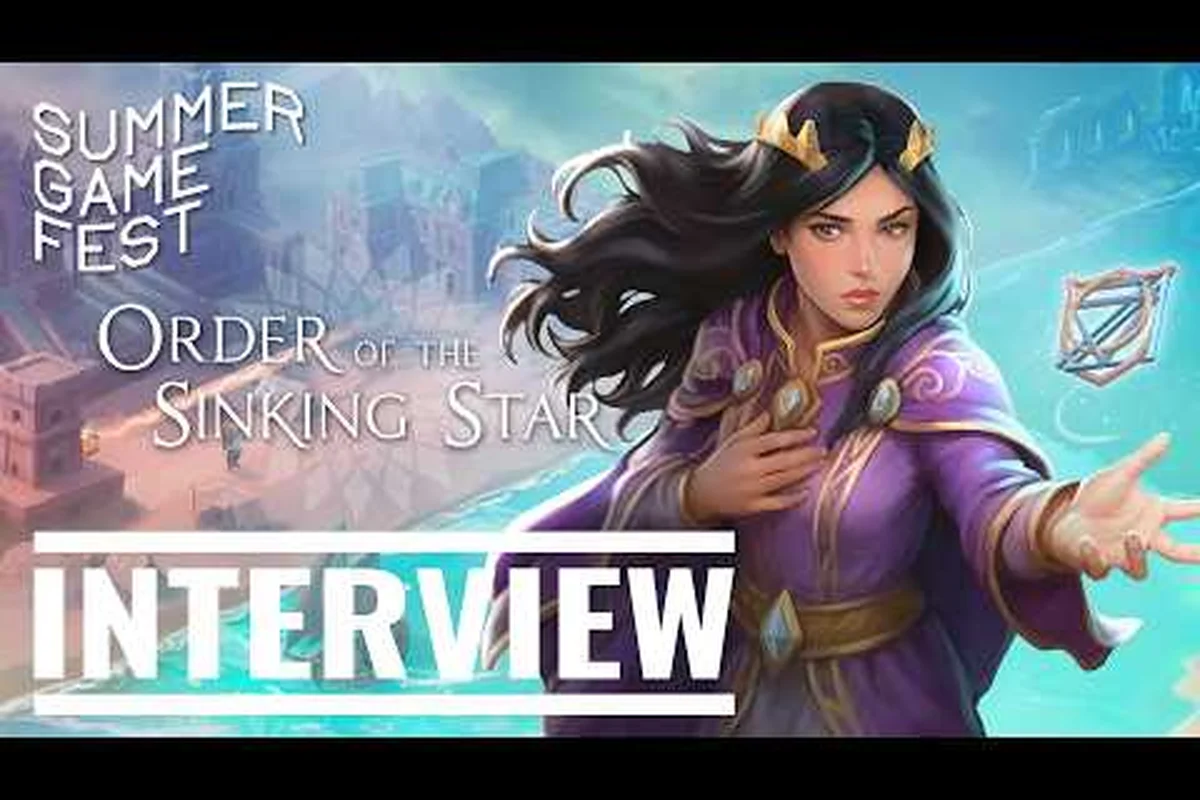
Zach Polansky's design philosophy for Order of the Sinking Star defines a puzzle experience that refuses to hold your hand. Unlike most modern games that push you through tutorials, waypoints, and objective markers, Polansky's approach demands true self-discovery. The order of the sinking star game design philosophy treats the player as an intelligent explorer, not a passive consumer. This article unpacks how the game achieves its radical trust in the player, why the absence of hints is a feature rather than a flaw, and how team members like Marc ten Bosch contributed to this uncompromising vision.
Detailed mechanics for the Order of the Sinking Star update were provided in the official Steam announcement.
Why the Game Has No Traditional Hint System
The absence of a standard hint system is the clearest expression of the order of the sinking star no hand holding approach. In most puzzle games, when you click a “hint” button, the game reveals a direct solution or highlights the next step. Order of the Sinking Star does the opposite — it strips away anything that could dilute the moment of personal discovery. According to early interviews with Polansky cited from the official Steam community page, the team deliberately rejected a traditional hint pipeline because it undermines the core emotional reward of solving a puzzle on your own. The game instead offers subtle environmental cues — the path a crumbling wall takes, the way a block casts a shadow, or the pattern of light filtering through a broken window. These aren't hints you can request; they are integrated into the world design itself.
The Philosophy Behind Refusing to Help
Polansky's background working alongside Jonathan Blow on The Witness heavily shapes this design choice. The belief is that if a game can tell you how to solve its puzzles, those puzzles weren't worth solving in the first place. The order of the sinking star game design philosophy argues that the player's struggle is generative — it creates meaning and ownership over the solution. The moment you figure out that a mirror in one world reflects a pressure plate in another, you don't just complete a puzzle; you learn to read the game's language. This approach also means the game reveres the player's time differently: it doesn't waste it with easy wins, but it also doesn't punish experimentation. Failure in Order of the Sinking Star is never the end — it's a natural part of the learning process. Community reports on forums suggest that most puzzles take multiple attempts, and the game respects each reset as a fresh opportunity to observe.
How This Impacts First-Time Players
First-time players often feel a sense of disorientation when they realize the game offers no direct guidance. You might wander into a world, see a complex contraption, and have no idea what your next step should be. This is intentional. The order of the sinking star no hand holding design forces you to slow down, scan every inch of the environment, and test every interaction. Eventually, patterns emerge. For example, in the Mirror Isles, you'll notice that certain statues rotate when you stand on specific tiles — but the game never tells you that. You discover it through trial and error. For more details on how to navigate this kind of open-ended exploration, the overworld guide offers zone-by-zone strategies for recognizing these environmental puzzles.
Comparing Hint Systems Across Puzzle Games
| Game | Hint Type | Player Dependency | Discovery Satisfaction |
|---|---|---|---|
| The Witness | Environmental cues only | Very low | Extremely high |
| Braid | Time-rewind (no hints) | Low | High |
| Portal 2 | In-game verbal hints | Moderate | Moderate |
| Order of the Sinking Star | Environmental cues only | Very low | Extremely high |
The table above highlights how Order of the Sinking Star aligns most closely with The Witness in its minimal hint support. This has consequences: players who are used to more hand-holding might want to practice on smaller puzzle sets first. The demo walkthrough gives a good sense of whether this style clicks for you before committing to the full game.
Environmental Storytelling as the Core Lore Delivery System
Order of the Sinking Star doesn't tell you its story through cutscenes or lengthy dialogue trees. Instead, it uses order of the sinking star environmental storytelling to weave narrative layers into every location. Every collapsed bridge, every abandoned contraption, and every charred piece of furniture adds context to the world's overarching mystery. It's up to you to piece together what happened by observing your surroundings rather than listening to exposition.
Reading the World Like a Text
When you walk into a new zone, ask yourself: what objects are out of place? Why are there three broken clocks in a room that seems otherwise untouched? The game's world acts like a visual novel without words. An overturned cart might suggest a desperate escape attempt. A long line of identical footprints leading into the water hints at a systematic approach to something. The order of the sinking star environmental storytelling approach ensures that observant players will uncover fragments of lore simply by being attentive. Each world has a distinct visual language, and tracing that language across zones gives you a feel for the larger conflict without a single line of spoken dialogue. According to community analysis on official discussion hubs, many deeper narrative beats — like the origin of the protagonist — are fully embedded in environmental clues rather than text.
Audio Logs and Their Role
The game does include audio logs, but even these are treated as environmental objects rather than exposition dumps. An audio log might play only when you stand in a specific triangle of light, and its content often sounds cryptic and fragmentary. It's not meant to explain; it's meant to enrich your emotional understanding of a place. The order of the sinking star dialogue while puzzling principle extends even here — the logs sometimes play while you're still manipulating levers or rotating platforms, requiring you to multitask between narrative absorption and mechanical execution. This fusion of story and gameplay is a hallmark of Marc ten Bosch's design influence. Ten Bosch, known for Miegakure and its 4D spatial puzzles, brought his expertise in non-linear spatial storytelling to Order of the Sinking Star. His touch is especially visible in worlds where perspective shifts reveal hidden story elements.
| Story Delivery Method | Directness | Player Agency | Immersion Level |
|---|---|---|---|
| Audio logs | Moderate | Moderate | High |
| Visual environment | Low | Very high | Very high |
| Dialogue during puzzles | High | Low | High |
Dialogue While Puzzling: A Deliberate Design Choice
One of the more controversial elements of the order of the sinking star dialogue while puzzling is that conversations continue even as you're actively solving puzzles. You might be rotating a massive contraption while a voice on a distant speaker drones on about the fall of an ancient civilization. This isn't a bug — it's a deliberate commitment to the game's philosophy of integrating story into gameplay without pauses.
How It Changes the Pacing
Traditional games often freeze the action during important story moments, creating a clean separation between "gameplay" and "narrative." Order of the Sinking Star rejects this binary. By letting dialogue happen alongside puzzles, the game prevents you from treating story as an interruption. The challenge becomes two-fold: you must solve the spatial puzzle while processing the auditory narrative. The order of the sinking star game design philosophy suggests that this reflects how real-world moments unfold — important conversations don't pause while you're solving a real problem. Some players find this frustrating, especially on the first playthrough, but community reports indicate that those who embrace it find the story more memorable because it's associated with specific mechanical breakthroughs. When you finally solve a 30-minute puzzle while a melancholy voice described the world's collapse, the two experiences fuse into a single powerful memory.
Practical Tips for Handling Dialogue Mid-Puzzle
-
Focus on one channel first: If the dialogue is distracting, prioritize solving the puzzle's mechanical step, then re-read the log in your inventory later.
-
Use your first playthrough for immersion: Don't try to catch every line on the first attempt. The game rewards repeated visits to areas.
-
Adjust audio balance: Lower music volume slightly to make dialogue more prominent without losing environmental sounds.
Players who want to fully understand how these layered experiences connect can refer to the merged puzzle solutions guide, which explains the relationship between multi-world puzzles and story events.
The Game Design Philosophy Behind Every Puzzle
The order of the sinking star game design philosophy rests on three pillars: observation, experimentation, and synthesis. The game doesn't ask you to memorize a set of rules; it asks you to learn by doing. Every world introduces a new mechanic — like Far Water that extends movement range differently depending on which world you're in — and then expects you to apply that mechanic across increasingly complex scenarios.
The Three Pillars Explained
| Pillar | What It Means in Practice | Common Pitfall |
|---|---|---|
| Observation | Scan every object, shadow, and texture change | Rushing past details |
| Experimentation | Try every logical action, even if it seems wrong | Fear of "wasting time" |
| Synthesis | Combine insights from different worlds to unlock new paths | Staying in one world too long |
Polansky designed these pillars knowing that players would feel lost at first. The order of the sinking star no hand holding approach doesn't punish you for failing; it rewards you for noticing patterns. If you get stuck in The Gilded Labyrinth, for instance, the solution often lies in a completely different world's rule set. This is where Marc ten Bosch's multi-dimensional thinking shines: he designed the crossover logic so that mechanics from World A naturally interact with World B's physics without explicit instruction. The game trusts you to make those mental leaps.
Application in Real Play Scenarios
Consider the first time you encounter a puzzle that spans two worlds. You're manipulating blocks in the Mirror Isles, but a corresponding structure shifts in the Heroes of Sokoban zone. The game never tells you about this connection — you notice it because a faint shimmer appears at the same time in both screens. This is order of the sinking star environmental storytelling in action: the shimmer itself is a narrative clue about how the worlds are connected. Once you learn to read these visual cues, the game opens up dramatically.
Why This Philosophy Benefits Your Experience
The benefits of the order of the sinking star game design philosophy extend beyond just puzzle satisfaction. They reshape how you think about problem-solving in everyday life. Many community members report that after spending time with Order of the Sinking Star, they started approaching real-world challenges with more patience and observation. The game teaches you that frustration is temporary, and that the most rewarding solutions come from understanding systems rather than memorizing steps.
Skill Transfer Beyond the Game
Players who complete the game often describe a "muscle" for recognizing patterns — whether it's in coding, navigating cities, or even debugging issues at work. The order of the sinking star no hand holding design builds mental resilience. You learn to trust your ability to figure things out without asking for help, a skill that's increasingly rare in an age of instant YouTube tutorials. The game also encourages social sharing in a unique way: since there are no in-game hints, players often form discussion groups to compare observations without spoiling solutions. This creates a community of equals rather than a hierarchy of "guides" and "students."
Balancing Frustration and Reward
Of course, not every player bonds with this philosophy immediately. Some find the lack of guidance overwhelming. But the game offers subtle buffers: you can always leave a world and return later, or try a different approach without penalty. The design acknowledges that frustration is part of the process, and the order of the sinking star game design philosophy ensures that every struggle is matched by a proportional moment of "aha!" that makes it worthwhile. For those on the fence, the demo provides a risk-free introduction to this mindset.
Frequently Asked Questions
What is Zach Polansky's background in game design?
Zach Polansky worked closely with Jonathan Blow on The Witness, where he developed his philosophy of minimal guidance and environmental storytelling. He also collaborated with Marc ten Bosch during early prototyping phases, which brought a multi-dimensional puzzle perspective to Order of the Sinking Star. His design is known for trusting the player to discover mechanics organically.
How does Marc ten Bosch's work influence the game?
Marc ten Bosch, creator of Miegakure, contributed to the multi-world interaction logic. His approach to 4D spatial puzzles directly inspired the crossover mechanics where puzzle elements in one world affect objects in another. His input is strongest in the merged-world sections, where players must think across dimensional boundaries to progress.
Does the game ever add hints in later updates?
According to official statements from Thekla Inc., the developers have no plans to add a traditional hint system. The order of the sinking star game design philosophy treats hints as antithetical to the experience. The team may add more environmental cues in future patches, but never direct solution reveals. Community feedback on this is split, but the design remains firm.
Can I play the demo to understand this philosophy?
Yes, the Steam demo contains puzzles that fully illustrate Order of the Sinking Star's no-hand-holding approach and dialogue-while-puzzling mechanic. Playing for an hour gives a clear sense of whether this philosophy suits your puzzle-solving preferences. The demo is available on Steam and Steam Deck.
How long does it take to adjust to this style?
Most players need 3–5 hours of disorientation before the environmental storytelling clicks. Clearing your first world—like Mirror Isles—makes the puzzle language intuitive. Because the game relies on observation, not hints, this adjustment is a natural part of learning its design philosophy.