
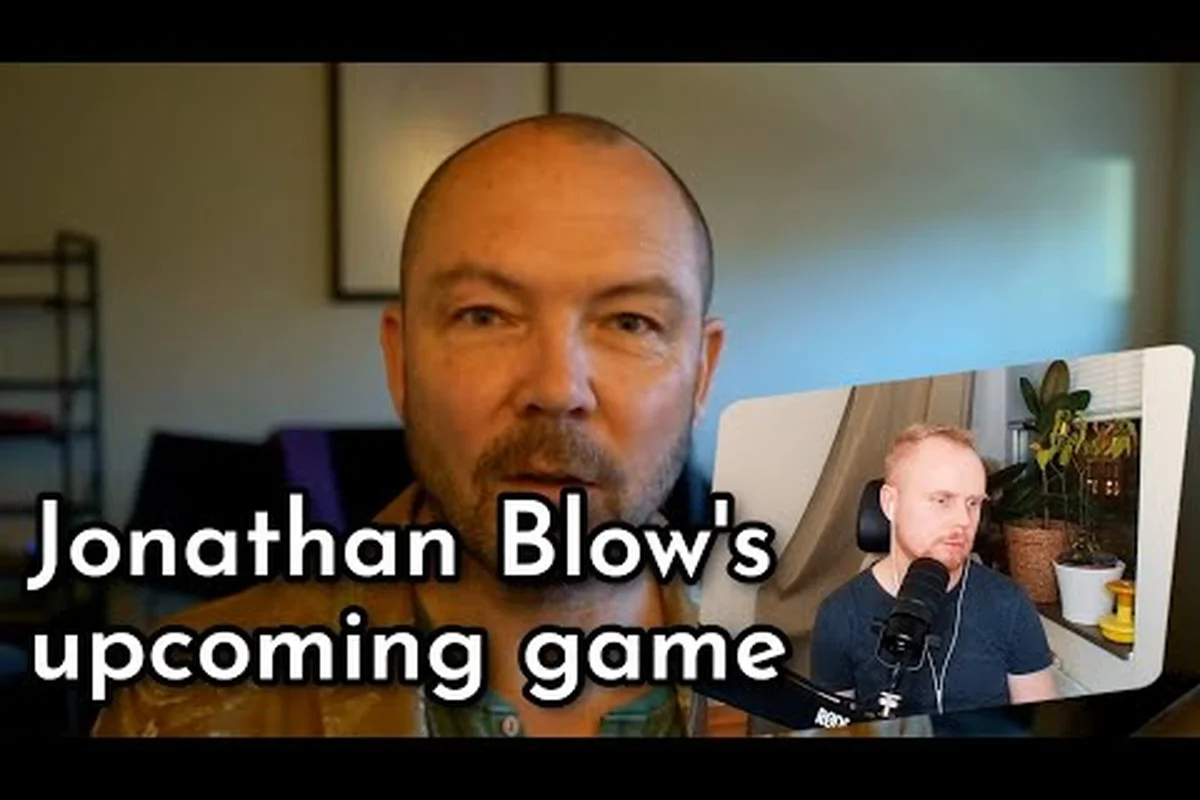
Order of the Sinking Star is not just another puzzle game; it is the product of a decade-long obsession with pushing the boundaries of logic and design. The ten years in the making journey behind Order of the Sinking Star reveals a studio that refused to compromise on its vision, building a custom engine from scratch and assembling a dream team of puzzle consultants. This article explores how Thekla Studio, led by Jonathan Blow, turned an ambitious concept into a reality that earned a 92% positive rating on Steam.
The Decade-Long Development: Why Order of the Sinking Star Took Ten Years
Jonathan Blow first hinted at a new project shortly after The Witness launched in 2016. What began as a small experiment with block-pushing mechanics gradually evolved into a massive puzzle adventure spanning four distinct worlds. The ten years in the making timeline is not a sign of inefficiency but a deliberate choice to refine every mechanic until it felt perfect. According to community reports, the team rewrote the game's core systems multiple times, discarding years of work when a better approach emerged.
Early Prototypes and the Shift to Full Production
In the first few years, Blow and a handful of programmers explored ideas that would later become the Mirror Isles and Heroes of Sokoban worlds. The prototype phase lasted roughly three years, during which the team tested over 200 puzzle concepts. Only about 40% of those made it into the final game. The shift to full production began in 2019 when Thekla secured additional funding and expanded the team to include dedicated artists and sound designers.
Key Milestones in the Development Timeline
The following table outlines the major milestones that defined the ten years in the making journey:
| Year | Milestone | Impact |
|---|---|---|
| 2016 | Project inception after The Witness | Core mechanics brainstorming begins |
| 2019 | Full production start | Team expansion and custom engine development |
| 2021 | First playable demo internally | Major gameplay loop validated |
| 2023 | Public demo release on Steam | 92% positive user rating achieved |
| 2025 | Beta branch for performance fixes | Steam Deck optimization completed |
| 2026 | Full release on PC, PS5, Nintendo Switch 2 | Ten-year journey culminates |
The table shows that the custom engine work began in earnest during the full production phase, which directly contributed to the game's unique feel. Players who experienced the demo noted that the Jai language engine allowed for instant puzzle state recalculations, something rarely seen in Unity-based puzzle games.
The Custom Jai Language Engine: Powering the Puzzle Experience
One of the most ambitious technical decisions Thekla made was to build the game using a proprietary programming language called Jai. The order of the sinking star custom engine is written entirely in Jai, a language created by Jonathan Blow himself. This allowed the team to optimize every aspect of the game for puzzle logic, memory management, and cross-platform performance.
Why Jai Instead of Unity or Unreal?
Blow has stated in interviews that existing engines introduced too much overhead for the kind of deterministic puzzle simulation he wanted. Jai gives the team direct control over memory layout and thread scheduling, which is critical for the worlds colliding mechanic where multiple puzzle states must be computed simultaneously. The following table compares Jai with popular engines:
| Feature | Jai (Custom Engine) | Unity | Unreal Engine |
|---|---|---|---|
| Memory control | Full manual control | Garbage collected | Partial control |
| Deterministic simulation | Native support | Requires workarounds | Not designed for it |
| Compile time | Sub-second for small changes | Minutes for large projects | Minutes |
| Cross-platform support | Custom per platform | Built-in | Built-in |
| Puzzle-specific optimizations | Tailor-made | Generic | Generic |
The Jai language engine also enabled the team to implement a beta branch quickly when players reported performance issues on Intel graphics. Because the engine is entirely under Thekla's control, they could push a fix within days rather than waiting for an engine vendor update.
Performance Benchmarks and Player Feedback
Community testing on the demo showed that the custom engine delivers stable 60 FPS on Steam Deck after the beta branch update. Players reported that the order of the sinking star custom engine handles complex multi-world puzzles without frame drops, a feat that would be challenging on off-the-shelf engines. According to the official Steam page, the demo holds a Very Positive rating with approximately 92% of 1,435 reviews being positive, many praising the smooth performance.
Thekla Studio and the Team Behind the Game
Thekla Studio is the independent development house founded by Jonathan Blow after the success of Braid and The Witness. For Order of the Sinking Star, Blow assembled a small but highly skilled team that included veteran programmers and puzzle designers. The order of the sinking star thekla studio approach emphasizes quality over quantity, with a flat hierarchy that encourages creative input from every member.
Key Contributors: Sean Barrett and Jonah Ostroff
Two names frequently mentioned in the credits are Sean Barrett and Jonah Ostroff. Sean Barrett is known for his work on game libraries and low-level optimization, bringing decades of experience to the custom engine project. Jonah Ostroff, a mathematician and puzzle designer, contributed to the logical structure of the game's hardest challenges. The following table summarizes their roles:
| Team Member | Role | Contribution |
|---|---|---|
| Jonathan Blow | Director & Lead Programmer | Overall vision, engine design, puzzle design |
| Sean Barrett | Engine Programmer | Low-level optimization, memory management |
| Jonah Ostroff | Puzzle Consultant | Mathematical puzzle logic, difficulty balancing |
| Additional consultants | Puzzle Design | Specialized mechanics for each world |
The involvement of puzzle consultants like Ostroff ensured that the puzzles never felt arbitrary. Each world's mechanics were stress-tested by experts before being implemented. The order of the sinking star puzzle consultants brought perspectives from competitive puzzle solving, which helped the team avoid common pitfalls like ambiguous clues or unsolvable states.
The Role of External Consultants
Beyond the core team, Thekla collaborated with several external puzzle designers to refine specific mechanics. For example, the Heroes of Sokoban world required a deep understanding of block-pushing logic, so consultants with experience in Sokoban variants were brought in. This collaborative approach is a hallmark of order of the sinking star thekla studio philosophy.
Puzzle Consultants and Design Philosophy
The order of the sinking star puzzle consultants played a crucial role in shaping the game's difficulty curve. Unlike many puzzle games that rely on a single mechanic, Order of the Sinking Star introduces new rules in each world and then combines them in the worlds colliding finale. This layered complexity required consultants to ensure that players could learn each system without feeling overwhelmed.
How Consultants Influenced the Design
The consultants provided feedback on puzzle clarity, hint placement, and the pacing of new mechanics. One notable example is the Mirror Isles world, where early prototypes had puzzles that were too similar. Consultants suggested introducing beam puzzles and crystal puzzles to add variety. The following table shows the types of puzzles influenced by consultants:
| World | Consultant Focus | Resulting Puzzle Types |
|---|---|---|
| Mirror Isles | Visual logic | Beam puzzles, gem puzzles |
| Heroes of Sokoban | Movement constraints | Push/pull/swap puzzles |
| Third World (unnamed) | Temporal mechanics | Time-based puzzles |
| Final World | Multi-world combos | Worlds colliding puzzles |
The order of the sinking star puzzle consultants also advised on the absence of a traditional hint system. Instead, the game relies on environmental storytelling and subtle nudges, a design choice that aligns with Blow's philosophy of respecting the player's intelligence.
The Design Philosophy: No Hand-Holding
Thekla's design philosophy is rooted in the belief that players should discover solutions themselves. This is why the game has no hint button and no tutorial pop-ups. The ten years in the making allowed the team to polish this approach to perfection. According to community reports, players who embrace the challenge often describe the "aha" moments as deeply satisfying. The order of the sinking star custom engine supports this by allowing instant retries and seamless state resets.
From Prototype to Launch: The Ten-Year Journey of Order of the Sinking Star
The public demo released on Steam in 2023 gave players a taste of the ten years in the making effort. The response was overwhelmingly positive, with the demo earning a 92% positive rating from over 1,400 reviews. This feedback loop allowed Thekla to fine-tune the full game before the October 8, 2026 release.
Demo Feedback and Iterations
Players praised the depth of the puzzles and the smooth performance, but also reported minor bugs and translation errors. Thekla responded quickly with a beta branch that addressed the most critical issues, such as the Intel graphics crash and the "Not Enough Memory" error. The order of the sinking star demo walkthrough community grew rapidly, with players sharing strategies and solutions on forums.
The Final Release and Platform Availability
Order of the Sinking Star launched on PC via Steam and Steam Deck, PlayStation 5, and Nintendo Switch 2. The custom engine allowed for near-identical performance across platforms, a rare achievement for an indie title. According to the official Steam announcement, the game supports 4K resolution and 60 FPS on all consoles. Players who want to explore the full puzzle count can check the game length guide for estimated playtime.
The Legacy of a Decade of Work
The ten years in the making story is not just about time spent; it's about the relentless pursuit of a singular vision. Thekla Studio, the Jai language engine, and the puzzle consultants all contributed to a game that stands as a testament to what can be achieved when a team refuses to cut corners. As one Steam reviewer put it, "He spent 10 years on block puzzles??? But then I kept playing, and my mind was blown."
Frequently Asked Questions
Why did Order of the Sinking Star take ten years to develop?
The development spanned a decade because Thekla built a custom engine using the Jai language and iterated on puzzle mechanics extensively. The team discarded years of work when better approaches emerged, prioritizing quality over speed. The result is a polished experience that earned a 92% positive rating in the demo.
What is the Jai language engine and why is it important?
Jai is a programming language created by Jonathan Blow specifically for game development. The order of the sinking star custom engine written in Jai gives the team full control over memory and performance, enabling deterministic puzzle simulation and instant state resets. This technical foundation is a key reason the game runs smoothly on multiple platforms.
Who are Sean Barrett and Jonah Ostroff in relation to the game?
Sean Barrett is a veteran engine programmer who optimized the custom engine for low-level performance. Jonah Ostroff is a mathematician and puzzle consultant who helped design the logical structure of the hardest puzzles. Both are credited with shaping the game's technical and puzzle quality.
How did puzzle consultants influence the game's design?
The order of the sinking star puzzle consultants provided feedback on puzzle clarity, variety, and difficulty pacing. They introduced new puzzle types like beam puzzles and crystal puzzles, and advised against a traditional hint system to preserve the "aha" moment. Their input ensured that each world's mechanics felt fresh and fair.
What platforms is Order of the Sinking Star available on?
The game launched on PC via Steam and Steam Deck, PlayStation 5, and Nintendo Switch 2 on October 8, 2026. Thanks to the custom engine, performance is nearly identical across all platforms, supporting 4K resolution and 60 FPS. The demo remains available for players to try before purchasing.