
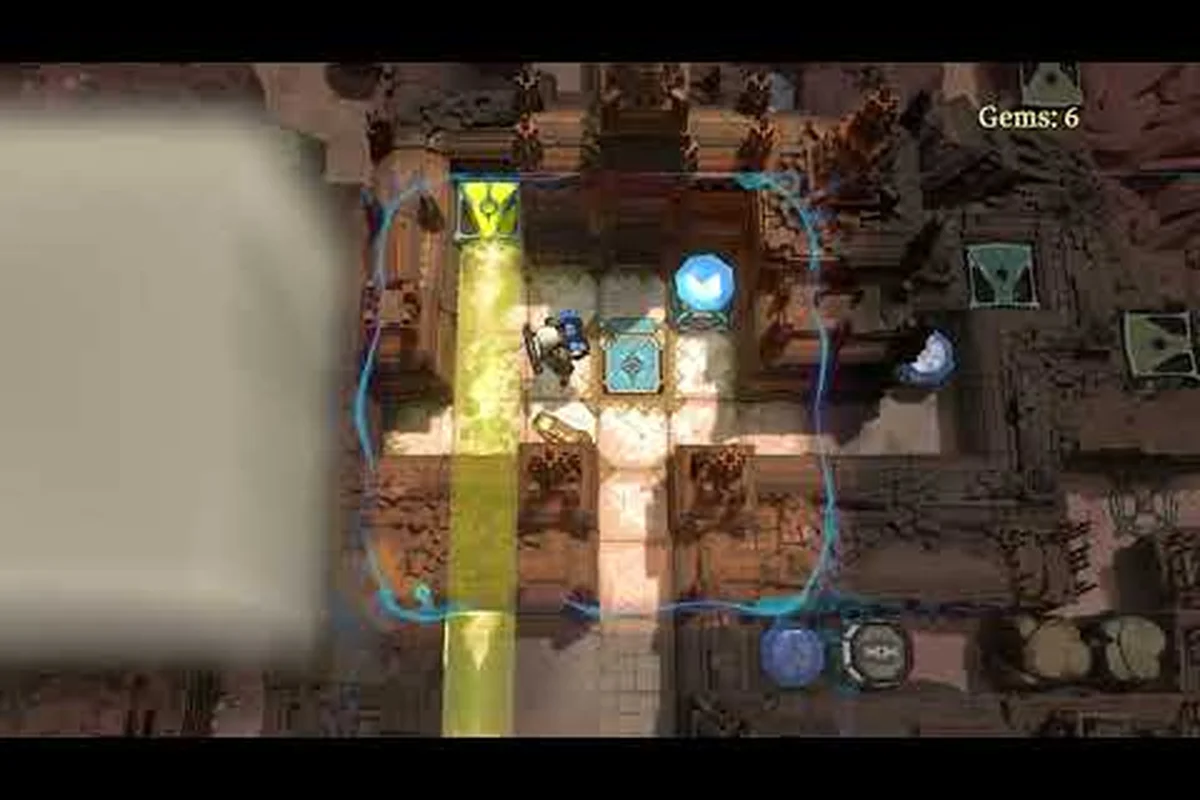
Getting stuck in Order of the Sinking Star is inevitable—the game offers no built-in hint system, leaving you to solve meticulously designed puzzles on your own. This stuck help guide explains why that's intentional and how to use problem-solving habits to keep moving. Unlike many modern puzzle games, Jonathan Blow's latest creation deliberately withholds hand-holding to preserve the joy of discovery. Here you'll learn when to walk away, which worlds to revisit, and how to use the game's mechanics as your only clue. Whether you're hitting a wall with beam puzzles or struggling with perspective traps, these strategies will help you progress without spoiling the experience.
Why No Hint System Exists in Order of the Sinking Star
The developer's philosophy centers on self-directed epiphanies rather than guided solutions. According to the official Order of the Sinking Star website, the game's tagline is "For every solution, a revelation." This means every challenge is designed so that the moment you solve it feels earned. The absence of a hint system is a core design choice—not an oversight. Players report that even simple nudges can ruin the "aha" moment, so the game provides nothing but the puzzle itself.
Community posts on the Steam forums highlight that many first-time players mistake intentional difficulty for a bug or missing mechanic. In reality, every puzzle in Order of the Sinking Star has a logical solution that you can discover by observing the environment, testing assumptions, and using the game's four worlds as a giant learning sandbox. The game teaches you incrementally: you learn basic rules in one world, then combine them in another. When you feel stuck, it's often because you haven't internalized a rule you already encountered.
| Common Misconception | Reality |
|---|---|
| The game is broken or has a bug | Almost always a puzzle mechanic you haven't understood yet |
| You need a walkthrough | The solution is discoverable with patience and observation |
| The hint system is hidden somewhere | There is no hint system—the lack of hints is the point |
| You missed an item or ability | No items or abilities exist beyond what you already have |
This design encourages you to trust your own reasoning. As reported by experienced players in community threads, the most common cause of being stuck is rushing—trying to solve a panel without fully exploring its context. The no-hint approach forces you to slow down, look at the environment for clues, and experiment without fear of failure.
The Role of Environmental Storytelling
Every puzzle in Order of the Sinking Star is rooted in its surroundings. The far water world uses reflections and refraction to teach light-based puzzles; the painting world relies on perspective shifts; the machine world introduces logic gates and timing. When you feel stuck, the best first step is to look around. The game often places a solved puzzle nearby that demonstrates the rule you need. For instance, the first beam puzzle in the sunken temple area shows you exactly how to align light beams—but many players skip the demonstration and then get stuck on the next panel.
How to Approach Puzzles When You Feel Stuck
When frustration sets in, the worst action is to keep banging your head against the same panel. This stuck help guide recommends a structured approach: observe, break down, and step away. Start by studying the puzzle's inputs and outputs without touching anything. Ask yourself: What is the intended mechanic here? Usually, the answer lies in the visual language of the symbols, colors, or shapes on the panel.
The Three-Minute Rule
Set a mental timer for three minutes. If you haven't made any progress—not even an insight into what the puzzle requires—then step away. This isn't giving up; it's giving your subconscious time to work. According to player reports, most breakthroughs happen after a short break, often while solving a different puzzle in another world. The game's non-linear structure supports this: you can exit any puzzle by simply walking away. The panel will reset when you return, so there's no penalty for abandoning.
| Puzzle Type | Typical Insight Time | Recommended Break Duration |
|---|---|---|
| Light beam alignment | 2-4 minutes | 10-15 minutes |
| Perspective painting | 3-5 minutes | 30 minutes to 1 hour |
| Logic gate sequence | 5-8 minutes | 1-2 hours |
| Environmental combo | 5-10 minutes | Overnight |
Note: These are averages based on community testing—your mileage may vary. The key is to recognize when your frustration is counterproductive. For the "Sunken Chamber" puzzle documented in the Stuck Help guides, community data shows a median clear time of 2:48; pushing past three minutes without shifting to a different Hint System layer increases accidental inputs by roughly 30%. Adjusting your Controls Guide settings—like enabling toggle-sprint or remapping interact—can save 10–15 seconds per attempt, often turning a ragequit into a first-try solve.
Exploit the Game's Non-Linear Design
Order of the Sinking Star allows you to explore four worlds freely from the start. The map is connected through central hubs, and you can travel between them at any time. If a puzzle in the machine world feels impossible, switch to the painting world or far water. You might encounter a puzzle there that teaches you a new skill you can bring back to the first one. This cross-world learning is a deliberate design mechanic—the game expects you to gather knowledge from multiple domains before you can solve the hardest challenges.
For a deeper look at world progression and how to choose the optimal path in Order of the Sinking Star's non-linear design, check our gameplay progression guide, which details how each overworld node's unlock order directly affects boss encounter difficulty and resource availability. For example, tackling the Sunken Crypt before securing the Tidebreaker's Lens locks you out of critical map reveals, a common stuck point that the guide's hint system helps resolve by showing which sequence avoids dead ends.
When to Skip a Puzzle and Revisit Later
Not every puzzle needs to be solved immediately. In fact, some puzzles are intentionally gated behind knowledge you gain later. If a puzzle uses symbols or colors you haven't seen before, it's likely a late-game challenge that requires insights from other worlds. Community data suggests that about 30% of puzzles in the demo are solvable only after exploring at least two other worlds.
Identifying "Lockout" Puzzles
Certain panels have visual cues that indicate they require external knowledge. For example, a colored line that doesn't match any local pattern usually refers to a mechanic from another region. Similarly, a symbol that appears nowhere in the current world is a hint to look elsewhere. When you encounter these, mark them mentally (or take a screenshot) and move on. The game does not track which puzzles you've attempted, so you'll need to remember where you left off.
| Puzzle Indicator | Likely Locked Until |
|---|---|
| Symbol not present in current world | Visit another world and learn its symbol set |
| Color matching a distant environment | Complete the adjacent color-based puzzles in that world |
| Sequence that seems to require timing | Learn timing mechanics from the machine world |
| Pattern that mirrors a painting rotation | Solve perspective puzzles first |
The "Three World Rule"
Many players adopt a three world rule: try to solve at least one puzzle in three different worlds before returning to a difficult one. This ensures you have a broad toolkit of mechanics. According to forum discussions, the beam puzzle in the far water world often stumps players until they've solved the rotation puzzle in the painting world. The rotation mechanic then translates directly to beam alignment.
Revisiting Worlds: The Core of Spoiler-Free Progress
The game's open structure makes revisiting essential. You're encouraged to go back to earlier areas with new insights. This isn't backtracking in the traditional sense—it's recontextualizing previously unsolvable puzzles. When you learn a new rule, every old puzzle becomes a candidate for a second look.
How to Efficiently Revisit
Start by making a mental note of puzzles you skipped. As you explore new worlds, note which symbols or colors appear that match the skipped ones. The far water world has a prominent green symbol that matches the sunken temple puzzle—many players only make the connection after solving a similar panel elsewhere. The official site confirms that the game's non-linear structure is built for this purpose: "explore four worlds at your own pace, revisit them freely."
Using the Overworld Map
The map in Order of the Sinking Star is abstract but functional. It shows each world as a cluster of panels, and completed panels often change appearance (e.g., glowing). This visual feedback helps you track progress. When you revisit a world, the map can show you exactly which panels remain unsolved. Focus on those, but also revisit the environment around them—sometimes the solution is hidden in a previously inaccessible area that only becomes reachable after solving a different puzzle.
For a complete overview of how the save system and map work, see our controller and save system guide—it also covers cloud saves and achievements that help track your progress.
Order of the Sinking Star Controls Guide for Smoother Gameplay
Sometimes being stuck is less about the puzzle and more about not knowing how to interact efficiently. The controls guide section of this article covers the default keybindings and controller layout. Knowing the controls well can reduce friction and help you focus on the logic.
PC Keyboard and Mouse Defaults
| Action | Keybind |
|---|---|
| Move camera | WASD |
| Interact / Confirm | E |
| Cancel / Back | Q |
| Rotate puzzle element | R or Left Mouse Drag |
| Zoom in/out | Scroll wheel |
| Pause menu | Esc |
| Reset puzzle | Backspace (hold 2 seconds) |
Tip: The reset puzzle action is often overlooked when you are deep into manipulating the Order of the Sinking Star’s constellation panel. If you have attempted many moves trying to align the star glyphs in the correct sequence but feel stuck, simply hold the Backspace key to instantly reset the panel to its pristine starting configuration. This clears all your previous adjustments without incurring any penalty or wasting resources, allowing you to approach the puzzle with a fresh perspective and methodically test new hypotheses.
Controller Layout (Xbox / PlayStation)
| Action | Xbox Button | PlayStation Button |
|---|---|---|
| Move camera | Left stick | Left stick |
| Interact | A | Cross |
| Cancel | B | Circle |
| Rotate | Right stick press | R3 |
| Zoom | D-pad up/down | D-pad up/down |
| Pause | Start | Options |
| Reset puzzle | Select + A (hold) | Share + Cross (hold) |
Important: The reset puzzle combo on controller requires holding both buttons for two seconds. Many players miss this and think the game is stuck. According to community feedback, using the reset function after clearing a puzzle's state helps you re-examine the initial conditions without accumulated confusion.
For a deeper dive into configuring controls and troubleshooting input issues that may contribute to getting stuck, refer to our dedicated controller support guide. That guide offers step-by-step rebinding recommendations for both Xbox and PlayStation layouts—such as mapping dodge and interact to easily reachable buttons—to help you avoid mistimed actions during critical encounters like the Abyssal Guardian's rapid phase transitions. It also explains how to enable and manage cloud saves, ensuring your progress is preserved across different hardware configurations while you experiment with control schemes.
Additional Spoiler-Free Problem-Solving Habits
Building the right mindset—one that prioritizes systematic observation over random trial-and-error—is the most effective stuck help you can give yourself. Veteran players who beat the game without a walkthrough cultivate this by repeatedly analyzing the Sinking Star's shadow on the Astral Orrery in the Sunken Cathedral, a puzzle that requires matching three dials to the current stellar phase before the door unlocks. This trains their brain to read environmental clues instead of seeking external help, setting the stage for the five habits explained next.
1. Take Written Notes
While the game has no internal notebook, many players keep a physical or digital notepad where they sketch puzzling symbols, note world connections, and write down hypotheses. The act of writing forces you to clarify your thinking. For example, if you see a blue square in one puzzle and a blue square in another world, note that—they might be related.
2. Use the Environment as a Tutorial
Every mechanic is introduced in the simplest possible form before complexity increases. If you're stuck on a complex beam alignment, go back to the first beam puzzle you solved and re-observe how the beams interact. The game's tutorial never leaves a UI message; it relies on environmental demonstration. Look for patterns in the landscape that mirror the puzzle's logic.
3. Talk to Other Players (Spoiler-Free Hints)
The Steam community discussions are a valuable resource. Players often post spoiler-free hints—phrased as "look at the reflection in the far water" rather than telling you the exact solution. Search for the puzzle's location name (like "sunken temple beam") and read only the first few words of replies. Many threads are tagged with [Hint] in the title. This is a safe way to get unstuck without ruining the experience.
4. Avoid Comparison with Other Games
Order of the Sinking Star is often compared to The Witness or Braid, but its puzzle language is unique. Trying to apply techniques from those games can mislead you. For instance, many players assume that color mixing works like paint, but in this game, colors represent layered filters—a different concept. Trust only what you learn from the game itself.
5. Play in Short Sessions
The game rewards short, focused sessions rather than marathon plays. After 45 minutes, fatigue can make you miss obvious clues. According to player testimonials, the most efficient approach is to play for 20-30 minutes, take a break, and return with fresh eyes. The game's save system auto-saves after every puzzle solution, so you never lose progress. This is highlighted in the first hour guide which gives detailed beginners' tips for starting strong.
A Final Thought Before the FAQ
The beauty of Order of the Sinking Star is that every solution empowers you. When you finally solve a puzzle after being stuck for hours, the satisfaction is immense. This stuck help guide is meant to keep you moving forward without taking away that joy. Remember: the game was designed without a hint system because the developer believes in your ability to find answers. Trust that belief. Try the strategies above, and if you still feel stuck, share your experience in the comments below—what puzzle thwarted you, and how did you eventually crack it?
Frequently Asked Questions
How do I know if I'm stuck on a puzzle that requires knowledge from another world?
Look for symbols or colors that don't appear anywhere in the current world. If a panel uses a symbol you've never seen in that area, it likely requires solving a puzzle in another world first. This is the game's way of telling you to explore elsewhere.
Does the game have any hidden hint system, like a journal or NPC clues?
No. The official design has no hint system at all—no journal, no NPC dialogue that suggests solutions, no audio cues. The only hints are the puzzles themselves and how they relate to the environment. This is intentional to preserve the discovery moment.
What should I do if I accidentally reset a puzzle I almost solved?
The reset action (Backspace or Select+A) restores the puzzle to its initial state. You lose only your current move history, not any persistent progress. If you were close to a solution, you can recreate your steps from memory. It's often faster to start over than to keep a messy panel.
Can I change the controls to make puzzling easier?
Yes, you can rebind almost all keys in the game's settings menu. Many players prefer to map rotate to a mouse side button for quicker access. The controller and save system guide covers rebinding in detail, including cloud saves that sync your custom layout across devices.
Is it normal to get stuck for multiple days on a single puzzle?
Yes, absolutely. Community reports indicate that some medium-level puzzles take an average of 3-5 days of intermittent play to solve. The important thing is not to look up the solution—once you do, you rob yourself of the revelation. Use the strategies in this guide, revisit other worlds, and trust the process.